
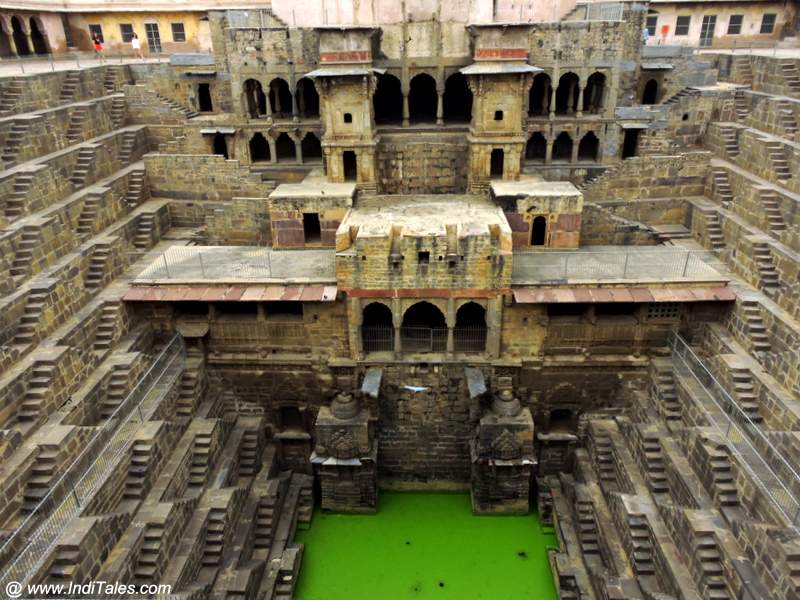
📍 Location
Situated at Abhaneri village, Dausa district, Rajasthan
About 95 km east of Jaipur
Located in the semi-arid region of eastern Rajasthan
🕰️ Historical Background
Built in the 9th century AD
Constructed by King Chand of the Nikumbha dynasty
Named after its founder: Chand Baori
Served as a water-harvesting structure in dry climate
🏗️ Architectural Style
One of the deepest and largest stepwells in India
Built in stepwell (baori/baoli) architectural style
Combines:
Functional engineering
Geometric aesthetics
📐 Structure & Design
Approximately:
13 storeys deep
3,500+ narrow steps
Square in shape
Steps arranged in perfectly symmetrical zig-zag patterns on three sides
Fourth side has a multi-storeyed pavilion
🏛️ Key Architectural Features
1️⃣ Stepped Terraces
Steps descend gradually to the water level
Allowed easy access to water at varying depths
2️⃣ Pavilion & Galleries
Multi-storeyed structure with:
Pillars
Arches
Provided resting place and shade
3️⃣ Cooling Effect
Temperature inside the baori remains 5–6°C cooler than outside
Used as:
Community gathering space
Resting place for travelers
🛐 Religious & Cultural Association
Located near Harshat Mata Temple
Water was considered sacred
Used for ritual bathing during festivals
💧 Importance of Chand Baori
Masterpiece of ancient Indian water management
Demonstrates:
Environmental adaptation
Mathematical precision
One of the oldest surviving stepwells in India
🌍 Tourism & Heritage Value
Major heritage attraction of Rajasthan
Featured in:
Films
Documentaries
Protected archaeological site


