
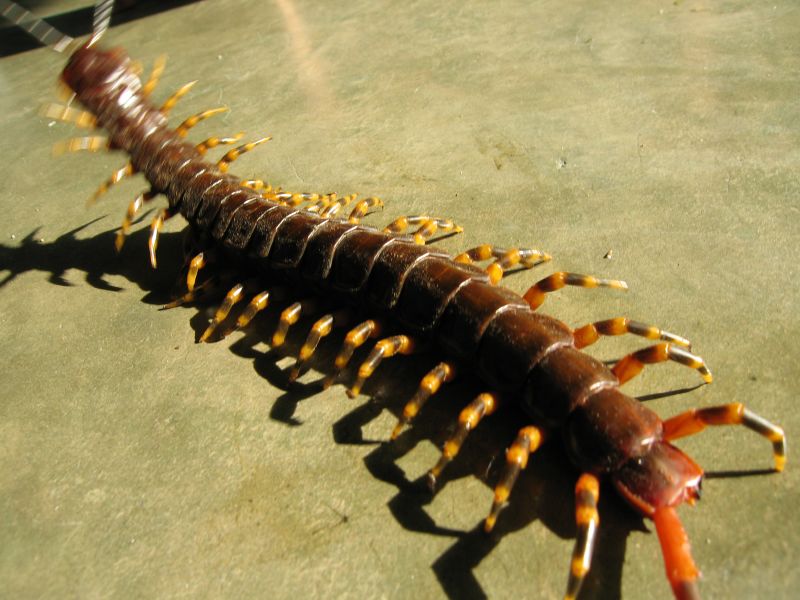
1. Systematic Position
Phylum: Arthropoda
Subphylum: Myriapoda
Class: Chilopoda
Genus: Scolopendra
2. Habit and Habitat
Terrestrial, nocturnal.
Found under stones, logs, leaf litter, moist places.
Carnivorous, feeds on insects, worms, small animals.
Fast-moving predator.
3. External Morphology
Body elongated, dorsoventrally flattened.
Bilaterally symmetrical.
Segmented body with a tough chitinous exoskeleton.
Body divided into:
Head
Trunk (many segments)
4. Head
Distinct, flattened.
Bears:
One pair of long antennae (sensory)
Simple eyes (ocelli) or eyes absent in some species
Mouthparts of biting and chewing type
Mouthparts
Mandibles
First maxillae
Second maxillae
5. Trunk
Composed of numerous segments.
Each segment bears one pair of legs (key feature).
First trunk appendages modified into poison claws (forcipules).
Last pair of legs elongated, often sensory.
6. Poison Claws (Forcipules)
Modified first pair of walking legs.
Connected to poison glands.
Used to inject venom into prey.
7. Exoskeleton & Moulting
Chitinous exoskeleton.
Growth by ecdysis (moulting).
Several moults before adulthood.
8. Digestive System
Complete digestive tract.
Mouth → pharynx → oesophagus → intestine → anus.
Carnivorous digestion.
9. Respiratory System
Tracheal system.
Spiracles present on trunk segments.
No gills or book lungs.
10. Circulatory System
Open type.
Dorsal tubular heart.
Haemolymph without respiratory pigment.
11. Excretory System
Malpighian tubules.
Excretion mainly uric acid.
12. Nervous System
Brain (supra-oesophageal ganglion).
Double ventral nerve cord with segmental ganglia.
Sensory organs:
Antennae
Sensory hairs
13. Reproductive System
Sexes separate (dioecious).
Fertilization internal (indirect via spermatophore).
Male and female usually do not copulate.
14. Development
Direct development.
Young resemble adults but with fewer segments.
New segments added during growth.
15. Economic Importance
Useful
Controls insect population.
Harmful
Venomous bite causes pain and swelling.
Can be dangerous to small animals.
16. Adaptive Features
Flattened body for hiding in crevices.
Poison claws for prey capture.
Numerous legs for fast movement.
Nocturnal habit avoids predators.


