
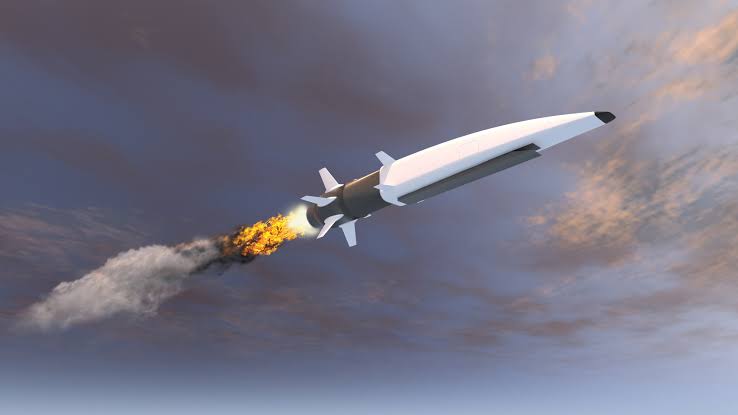
What are Hypersonic Missiles?
Hypersonic missiles are advanced weapons that travel at speeds greater than Mach 5 (five times the speed of sound) and can manoeuvre during flight, making them extremely difficult to detect and intercept.
Key Features
Speed: > Mach 5
High manoeuvrability (unpredictable trajectory)
Low reaction time for defence systems
Fly at lower altitudes than ballistic missiles
Can carry conventional or nuclear warheads
Types of Hypersonic Weapons
1️⃣ Hypersonic Glide Vehicles (HGVs)
Launched atop a ballistic missile
Glide towards target at hypersonic speed
Manoeuvrable during descent
📌 Example: China’s DF-ZF
2️⃣ Hypersonic Cruise Missiles (HCMs)
Powered throughout flight
Use scramjet engines
Fly within atmosphere
📌 Example: BrahMos-II (under development)
Hypersonic Missiles vs Ballistic Missiles
Hypersonic
Ballistic
Manoeuvrable
Predictable path
Atmospheric flight
Space-based mid-course
Hard to intercept
Easier to track
Shorter warning time
Longer detection time
India’s Hypersonic Programme
🔹 HSTDV (Hypersonic Technology Demonstrator Vehicle)
Developed by DRDO
Uses scramjet propulsion
Successful flight tests
Foundation for future hypersonic missiles
🔹 BrahMos-II (K)
Indo-Russian project
Expected speed: Mach 7–8
Still under development
Strategic Importance for India
Counters advanced missile defence systems
Enhances deterrence credibility
Critical in two-front threat scenario
Strengthens technological edge
Part of future warfare doctrines
Global Hypersonic Race
USA: Conventional Prompt Strike
China: DF-17
Russia: Avangard, Zircon
India focusing on indigenous capability
Challenges
Complex propulsion technology
Heat management at extreme speeds
High cost & testing difficulty
Lack of effective counter-defence
Way Forward
Accelerate R&D via DRDO
Joint ventures & tech transfer
Integrate with space & cyber domains
Develop counter-hypersonic defence


