
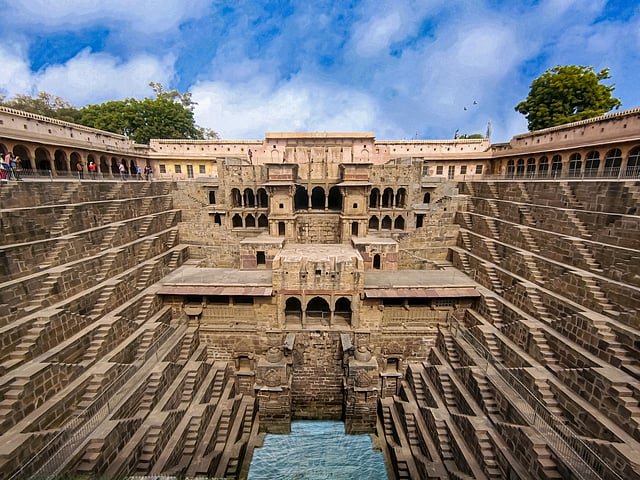
Why Stepwells Are Special
Stepwells (called baoli, vav, or pushkarni) are ancient structures primarily built to harvest, store, and access water in dry climates. Beyond their practical purpose, they became social, religious, and architectural marvels — offering cool resting places, sacred spaces, and intricate stone craftsmanship that reflects local artistic traditions.
🏆 5 Iconic Stepwells Highlighted
1. Chand Baori — Rajasthan
One of India’s deepest and largest stepwells, built in the 9th century by the Nikumbh dynasty.
Features about 3,500 symmetrical steps across 13 levels, plunging around 30 meters deep.
A striking example of functional engineering combined with geometric beauty.
2. Mata Bhavani’s Stepwell — Gujarat
Dates back to the 11th century Solanki era.
Constructed not just for water but also with religious significance, dedicated to Goddess Bhavani.
One of the early instances where stepwells integrated public utility with spiritual space.
3. Adalaj Stepwell — Gujarat
Built in 1499 under Queen Rudabai.
Indo-Islamic architectural fusion with beautifully carved corridors and chambers.
Includes passive cooling and ventilation design, showing brilliant pre-modern engineering.
4. Agrasen Ki Baoli — Delhi
A historic stepwell in central Delhi with arcaded niches and deep staircases.
Surrounded by legends and lore and frequently featured in photography and film.
Symbolizes ancient water engineering right in the heart of a bustling city.
5. Rani Ki Vav — Gujarat (UNESCO World Heritage Site)
Built in the 11th century by Queen Udayamati; listed as a UNESCO World Heritage Site.
UNESCO World Heritage Centre
Known for its inverted-temple design with richly detailed carvings and over 1,500 sculptures on seven levels of steps.
A pinnacle of craftsmanship, combining spiritual symbolism and structural ingenuity.
📌 What Makes Stepwells Beautiful
Engineering ingenuity: Deep excavations with stair systems allowing water access year-round.
Architectural diversity: From simple stone steps to lavish, carved interiors blending Hindu and Islamic motifs.
Cultural hubs: Gathering places for pilgrims, villagers, and travelers — cool retreats from summer heat.
Spiritual significance: Some served as temples or ritual spaces, reflecting the sacredness of water in many traditions


