
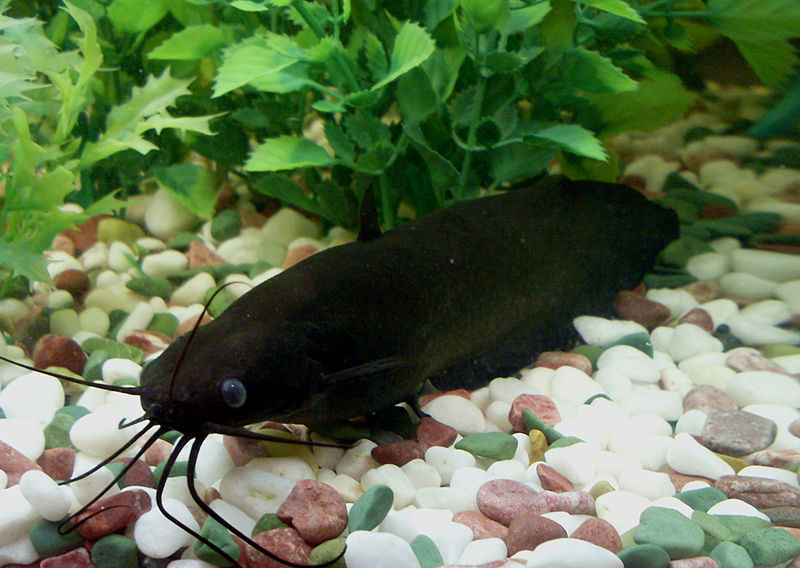
Systematic Position
Kingdom: Animalia
Phylum: Chordata
Subphylum: Vertebrata
Class: Pisces (Osteichthyes)
Order: Siluriformes
Family: Heteropneustidae
Genus: Heteropneustes
Species: Heteropneustes fossilis
Habit & Habitat
Freshwater, bottom-dwelling fish
Found in ponds, swamps, ditches, paddy fields
Common in India, Bangladesh, Nepal, Sri Lanka
Carnivorous
Can live in muddy, low-oxygen water
External Morphology
Body elongated, slender, cylindrical
Skin scaleless, smooth and slimy
Colour: brownish to black
Head small, slightly depressed
Mouth terminal
Four pairs of barbels (sensory)
Eyes small
Dorsal fin short
Anal fin long, extending towards caudal fin
Caudal fin rounded
Endoskeleton
Bony endoskeleton
Vertebral column well developed
Skull light but strong
Jaws bear sharp teeth
Digestive System
Mouth → pharynx → oesophagus → stomach present → intestine → anus
Intestine short (carnivorous habit)
Diet: worms, insects, crustaceans, small fishes
Respiratory System
Respiration by gills
Possesses accessory respiratory organs in the form of
long paired air sacs extending along the vertebral column
Enables air breathing and survival out of water
Circulatory System
Closed circulatory system
Heart two-chambered (auricle + ventricle)
Nucleated RBCs
Excretory System
Mesonephric kidneys
Excretion ammonotelic
Nervous System
Brain moderately developed
Spinal cord present
Lateral line system present
Sense Organs
Barbels well developed (touch & taste)
Eyes small (weak vision)
Internal ears for balance
Reproductive System
Dioecious
Oviparous
Fertilization external
Breeding season: monsoon
Economic Importance
Nutritious food fish
High protein content
Medicinal value (recommended for convalescent patients)
Hardy species in aquaculture
Special Features / Identifying Characters
Scaleless body
Four pairs of barbels
Long paired air sacs (accessory respiratory organs)
Carnivorous habit
Survival in low-oxygen conditions


