
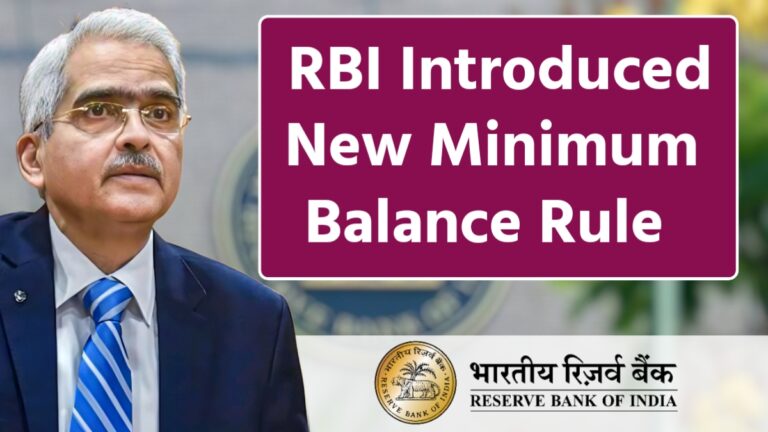
What the RBI Has Announced
From January 15, 2026, the Reserve Bank of India (RBI) is standardising minimum balance norms that banks can enforce on savings and current accounts. The aim is to reduce wide variation across banks, cut hidden penalty fees, and improve transparency for customers.
🏦 New Minimum Balance Thresholds for Savings Accounts
Under the new central guidelines:
Metro cities: ₹5,000
Semi-urban areas: ₹3,000
Rural regions: ₹1,000
These are uniform thresholds that banks will generally follow, replacing the wide range of different minimums that previously existed across lenders.
📈 Current Accounts
Current accounts (used mainly by businesses) will also have higher standardized minimum balance thresholds, though exact figures can vary by bank and segment.
🎯 Why This Matters
Greater transparency: Customers can expect more consistent norms across banks.
Less variation: Previously, some banks charged vastly different minimums—even within the same city.
Urban impact: Metro customers are likely to see the biggest increases compared with some older bank rules.
💡 What Won’t Change
Zero-balance accounts like Jan Dhan/Yojana accounts remain exempt from minimum balance requirements.
Banks can still set their own penalty structures for non-maintenance of balance — but these must comply with overall RBI guidelines and be clearly communicated.
📌 What You Should Do Before Jan 15
Check your bank’s communication: Banks are required to inform customers of any changes to maintenance requirements and penalties.
Update your account balance habits: If your current balance often sits near the old minimum, plan ahead to avoid penalties after the new norms begin.
Explore zero-balance options: If maintaining a balance is difficult, a Basic Savings Bank Deposit (BSBD) or Jan Dhan account might be preferable. These are not subject to minimum balance rules.


