
1. Systematic Position
Kingdom: Fungi (traditionally studied with fungi)
Division: Eumycota
Class: Oomycetes
Order: Peronosporales
Genus: Albugo
👉 Common name: White rust fungus
👉 Important species: Albugo candida – causes white rust of crucifers
2. Habitat
Obligate parasite
Grows on cruciferous plants (mustard, cabbage, radish)
Common in cool and moist conditions
3. Thallus Structure
Mycelium:
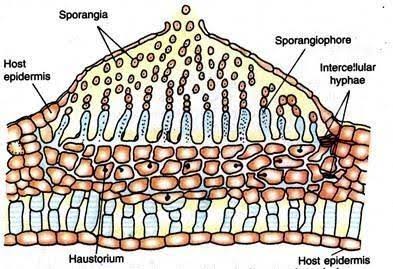
Intercellular
Aseptate (coenocytic)
Produces haustoria inside host cells for absorption
4. Cell Wall & Reserve Food
Cell wall mainly composed of cellulose and glucans (not chitin)
Reserve food: oil and glycogen
5. Symptoms of Disease (White Rust)
White, blister-like pustules on:
Leaves
Stems
Inflorescence
Severe infection causes hypertrophy and malformation of floral parts (stag-head condition)
6. Reproduction in Albugo
Occurs by asexual and sexual methods
A. Asexual Reproduction
By zoospores
Process
Intercellular hyphae form sporangiophores
Sporangiophores bear sporangia in chains
Sporangia germinate in two ways:
Indirect germination: sporangium releases biflagellate zoospores
Direct germination: sporangium germinates by germ tube
Zoospores encyst and infect host tissue
B. Sexual Reproduction
Type: Oogamous
Sex Organs
Oogonium: Female, contains single oosphere
Antheridium: Male, club-shaped
Process
Antheridium attaches to oogonium
Fertilization tube develops
Male nucleus enters oogonium
Fusion forms oospore
7. Oospore
Thick-walled
Resting structure
Survives unfavorable conditions
Germinates to form sporangium or germ tube
8. Life Cycle
Diploid dominant (characteristic of Oomycetes)
Meiosis occurs during gamete formation
9. Economic Importance
Harmful Effects
Causes heavy loss in mustard and cabbage crops
Affects yield and quality
Control Measures
Use disease-resistant varieties
Crop rotation
Fungicide application (e.g., Bordeaux mixture)
10. Diagnostic Features (Exam Points)
Obligate parasite
Aseptate intercellular mycelium
Cell wall of cellulose
White blister-like pustules
Oogamous sexual reproduction


