
1. Systematic Position (Classification)
Kingdom: Fungi
Division: Ascomycota
Class: Lecanoromycetes
Order: Lecanorales
Family: Rhizocarpaceae
Genus: Rhizocarpon
2. General Introduction
Rhizocarpon is a crustose lichen, best known for the bright yellow species Rhizocarpon geographicum, commonly called the map lichen.
It is a symbiotic association between:
Mycobiont: Ascomycete fungus
Phycobiont: Green alga (Trebouxia)
3. Habitat
Grows mainly on rocks (saxicolous)
Common in cold, alpine, and polar regions
Extremely slow-growing but long-lived
4. Thallus Structure
Type: Crustose
Colour: Yellow, greenish-yellow, grey, or black
Surface: Areolate (divided into polygonal patches)
Attachment: Firmly attached to rocks
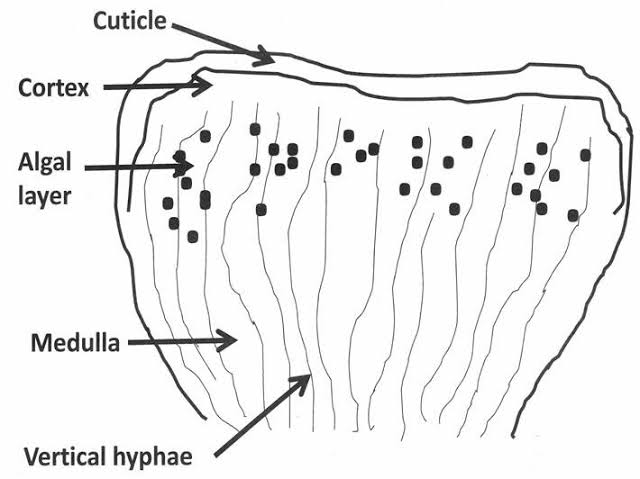
Internal Structure
Upper Cortex
Thick, compact fungal hyphae
Pigmented, provides protection
Algal Layer
Contains green algal cells (Trebouxia)
Photosynthetic zone
Medulla
Loosely arranged fungal hyphae
Lower Cortex
Absent
5. Reproduction
A. Vegetative Reproduction
Fragmentation of thallus
Sometimes by areoles breaking off
B. Asexual Reproduction
By conidia formed in pycnidia (rare)
C. Sexual Reproduction
Occurs through the fungal partner
Fruiting body is an apothecium
Apothecium
Small, black, sunken or sessile
Contains asci and paraphyses
Asci
Usually contain 8 ascospores
6. Nutrition
Algal partner: Manufactures food by photosynthesis
Fungal partner: Absorbs water, minerals, and offers protection
Relationship is mutualistic
7. Special Importance – Lichenometry
Rhizocarpon geographicum is used in lichenometry
Helps estimate the age of exposed rock surfaces and glaciers
8. Ecological and Economic Importance
Pioneer species in bare rock colonization
Aids in rock weathering and soil formation
Indicator of climatic conditions
9. Diagnostic Features (Exam Points)
Crustose lichen
Areolate thallus
Algal partner → Trebouxia
Black apothecia
Used in lichenometry


