
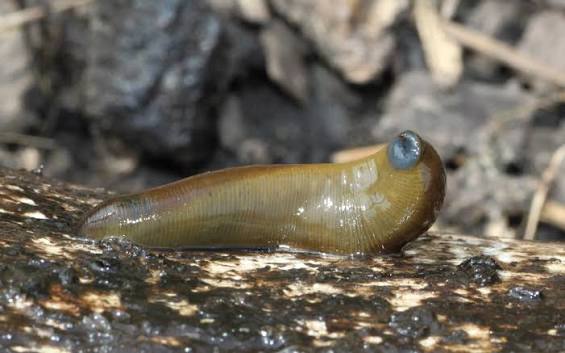
1. Systematic Position
Phylum: Annelida
Class: Hirudinea
Order: Arhynchobdellida
Genus: Haemopis
2. Habit and Habitat
Freshwater leech
Found in ponds, lakes, marshes, and slow-moving streams
Free-living and predatory, not a true blood-sucking parasite
Commonly called horse leech
3. External Morphology
Body Shape and Size
Body elongated, dorsoventrally flattened
Length about 10–15 cm
Colour usually dark brown or greenish
Body shows many external annuli
Segmentation
About 33 true segments
External rings are false segmentation
Suckers
Two suckers present:
Anterior sucker – small, contains mouth
Posterior sucker – large, used for attachment and locomotion
Setae & Parapodia
Setae absent
Parapodia absent
4. Body Wall
Thin cuticle
Epidermis with mucus-secreting glands
Muscular layers:
Circular
Longitudinal
Oblique muscles (well developed)
5. Coelom
True coelom reduced
Represented by haemocoelic sinuses
Filled with blood
6. Digestive System
Complete digestive tract
Mouth located in anterior sucker
Jaws absent (important difference from Hirudo)
Pharynx muscular and suctorial
Intestine simple, without large caeca
Feeding habit:
Predatory
Feeds on small worms, insect larvae, snails
7. Circulatory System
True blood vessels absent
Blood circulates through coelomic sinuses
Haemoglobin present in blood
8. Respiratory System
Respiration through general body surface
No specialized respiratory organs
9. Excretory System
Excretion by nephridia
About 17 pairs of nephridia
Remove nitrogenous wastes
10. Nervous System
Well developed
Consists of:
Cerebral ganglia
Circum-pharyngeal connectives
Double ventral nerve cord with segmental ganglia
Sensitive to touch and vibrations
11. Reproductive System
Hermaphrodite
Cross-fertilization
Male organs:
Testes, vas deferens, penis
Female organs:
Ovaries, oviducts
Clitellum appears only during breeding season
12. Fertilization and Development
Fertilization internal
Cocoon formation
Direct development
Young leech resembles adult
13. Locomotion
Looping (inching) movement using:
Anterior sucker
Posterior sucker
Can also swim by body undulations
14. Economic & Biological Importance
Controls population of small aquatic organisms
Important link in freshwater food chains
Not harmful to humans (non-blood-sucking)
15. Distinctive Features of Haemopis
Freshwater, free-living leech
Jaws absent
Predatory, not sanguivorous
Two suckers present
Coelom reduced
16. Identification Characters (One-liners)
Jawless predatory leech → Haemopis
Free-living freshwater leech → Haemopis


