
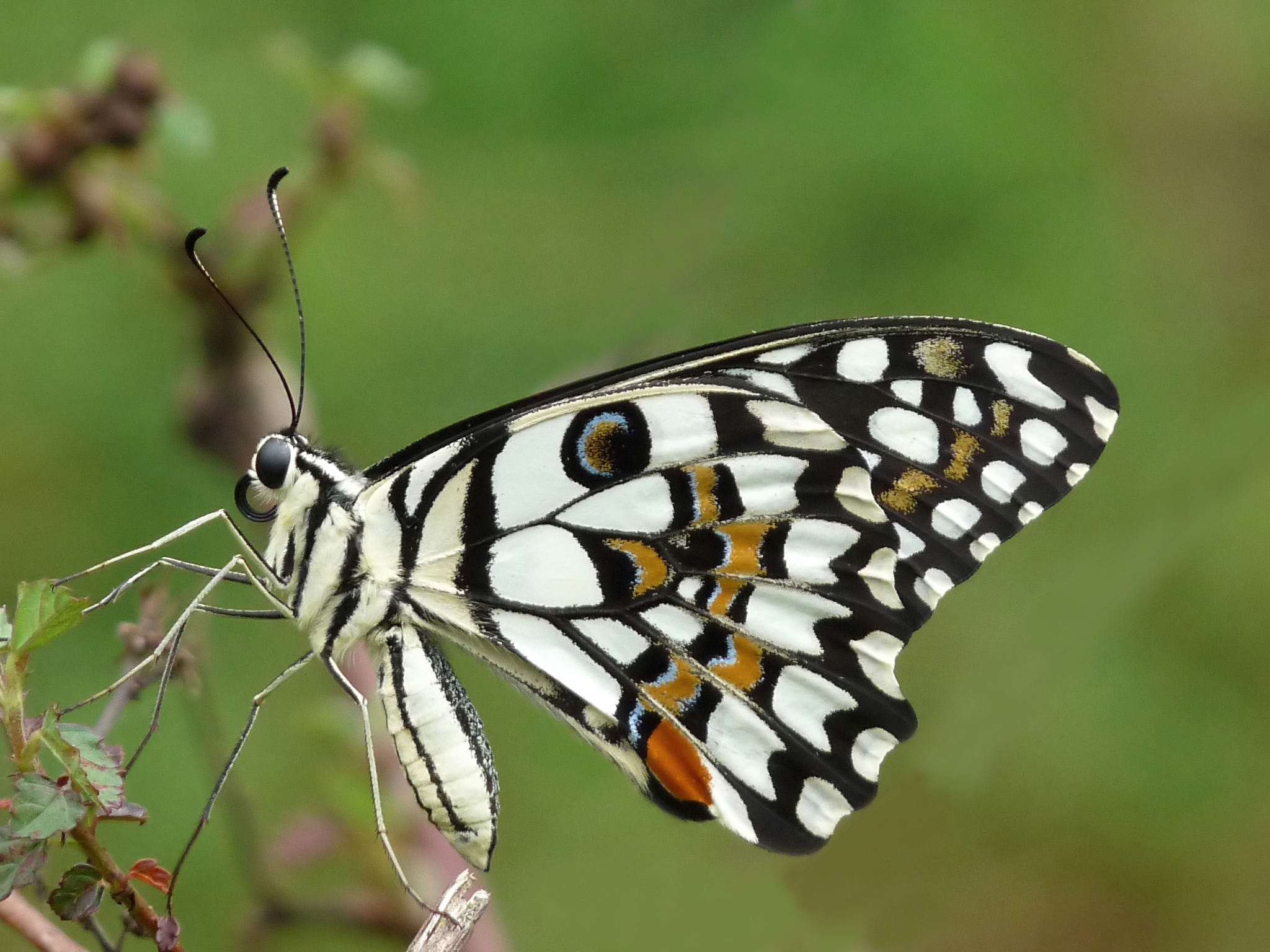
1. Systematic Position
Phylum: Arthropoda
Class: Insecta
Order: Lepidoptera
Genus: Papilio (example)
2. Habit and Habitat
Terrestrial, diurnal insect.
Found in gardens, fields, forests.
Adults feed on nectar (pollinators).
Larvae (caterpillars) are herbivorous.
3. External Morphology
Body soft, elongated, bilaterally symmetrical.
Body divided into three regions:
Head
Thorax
Abdomen
Body and wings covered with minute coloured scales (key feature of Lepidoptera).
4. Head
Small, rounded, freely movable.
Compound eyes large.
One pair of club-shaped antennae (diagnostic feature of butterflies).
Mouthparts of siphoning type.
Mouthparts
Long, coiled proboscis (formed by maxillae).
Used for sucking nectar.
Mandibles absent.
5. Thorax
Divided into:
Prothorax
Mesothorax
Metathorax
Appendages
Three pairs of legs (walking type).
Two pairs of wings:
Forewings (larger)
Hind wings (smaller)
Wings are membranous and scaly.
6. Abdomen
Long, segmented (usually 10 segments).
No appendages.
Contains digestive, excretory, and reproductive organs.
7. Exoskeleton & Moulting
Chitinous exoskeleton.
Growth occurs by moulting during larval stages.
Adult butterfly does not moult.
8. Digestive System
Complete digestive system.
Mouth → oesophagus → stomach → intestine → rectum → anus.
Larva has strong chewing mouthparts.
Adult feeds only on liquid food.
9. Respiratory System
Tracheal system.
Spiracles present on thorax and abdomen.
Oxygen delivered directly to tissues.
10. Circulatory System
Open circulatory system.
Blood (haemolymph) colourless.
Does not transport oxygen.
11. Excretory System
Malpighian tubules.
Excretion mainly of uric acid (uricotelic).
12. Nervous System
Brain (supra-oesophageal ganglion).
Double ventral nerve cord.
Sense organs:
Compound eyes (vision)
Antennae (smell & balance)
Sensory hairs
13. Reproductive System
Sexes separate (dioecious).
Fertilization internal.
Eggs laid on host plant leaves.
14. Life Cycle & Development
Butterfly shows complete metamorphosis (holometabolous).
Stages
Egg
Larva (Caterpillar) – feeding stage
Pupa (Chrysalis) – resting stage
Adult (Imago)
15. Economic Importance
Useful
Important pollinators.
Indicators of healthy ecosystems.
Aesthetic and educational value.
Harmful
Larvae damage crops and garden plants.
16. Adaptive Features
Bright colours for species recognition.
Scales help in flight and protection.
Proboscis adapted for nectar feeding.
Complete metamorphosis reduces competition between larva and adult.


