
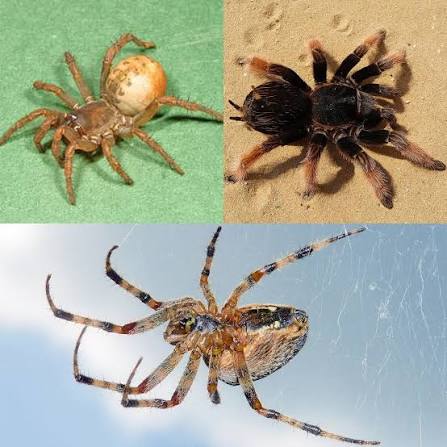
1. Systematic Position
Phylum: Arthropoda
Subphylum: Chelicerata
Class: Arachnida
Order: Araneae
Genus: Aranea / Araneus (example)
2. Habit and Habitat
Mostly terrestrial.
Found in gardens, forests, houses.
Carnivorous, feeds on insects.
Mostly nocturnal.
3. External Morphology
Body bilaterally symmetrical, unsegmented externally.
Covered with chitinous exoskeleton.
Body divided into two regions:
Cephalothorax (prosoma)
Abdomen (opisthosoma)
4. Cephalothorax
Formed by fusion of head and thorax.
Covered by a carapace.
Bears six pairs of appendages:
Appendages
Chelicerae (1 pair)
Piercing and poison-injecting
End in fangs with poison glands
Pedipalps (1 pair)
Sensory and food handling
Modified as copulatory organs in males
Walking legs (4 pairs)
Jointed, adapted for walking and climbing
5. Eyes
Simple eyes (ocelli) only.
Usually 8 eyes arranged in rows.
Vision detects movement more than detail.
6. Abdomen
Soft, unsegmented.
Bears:
Spinnerets (silk-producing organs)
Genital opening
Book lung openings
7. Silk Glands & Web
Silk secreted by spinnerets.
Silk used for:
Web building
Capturing prey
Egg protection
Movement (dragline)
8. Digestive System
Incomplete digestion outside body (extra-oral digestion).
Digestive enzymes injected into prey.
Liquid food sucked in.
Midgut has digestive caeca.
9. Respiratory System
Respiration by:
Book lungs
Sometimes tracheae
Book lungs are leaf-like structures for gas exchange.
10. Circulatory System
Open type.
Dorsal tubular heart.
Haemolymph colourless.
No respiratory pigment usually.
11. Excretory System
Malpighian tubules
Coxal glands
Excretion mainly uric acid / guanine.
12. Nervous System
Brain and fused thoracic ganglia.
Ventral nerve mass.
Sense organs:
Sensory hairs
Slit sensilla (detect vibrations)
13. Reproductive System
Sexes separate (dioecious).
Fertilization internal.
Male
Pedipalps modified into copulatory organs.
Female
Larger than male.
Lays eggs in silken egg sac.
14. Development
Direct development.
Young spiders resemble adults.
No metamorphosis.
15. Economic Importance
Useful
Controls insect population.
Silk has scientific and medical value.
Harmful
Some species are venomous.
Bites may cause irritation or pain.
16. Adaptive Features
Poison fangs for capturing prey.
Silk production for survival.
Sensitive hairs for vibration detection.
Cryptic coloration for camouflage.


