
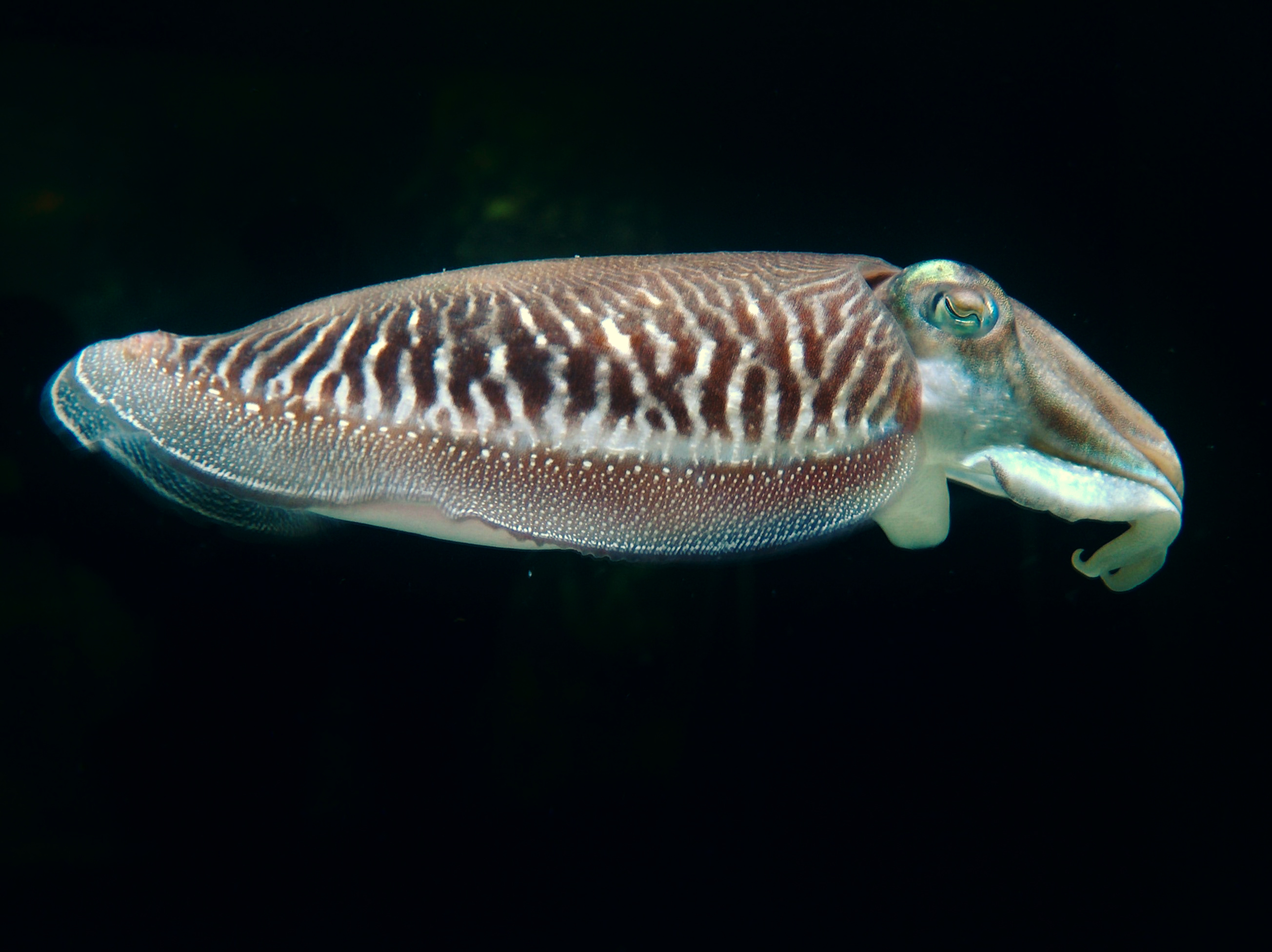
Sepia (Cuttlefish)
Systematic Position
Phylum: Mollusca
Class: Cephalopoda
Genus: Sepia
Habit and Habitat
Marine mollusc
Found in coastal seas and shallow waters
Lives near the sea bottom
Carnivorous
External Morphology
Body is broad, flattened, and oval
Shell absent externally, present as an internal cuttlebone
Body divided into:
Head
Mantle
Visceral mass
Foot modified into 10 appendages:
8 short arms
2 long retractile tentacles
Arms and tentacles bear suckers
Cuttlebone (Special Feature ⭐)
Internal shell made of calcium carbonate
Helps in buoyancy regulation
Fins
Pair of lateral fins extending along mantle margins
Help in slow swimming and balance
Mantle and Siphon
Mantle encloses visceral mass
Funnel (siphon) used for jet propulsion
Digestive System
Complete digestive system
Mouth contains beak-like jaws
Radula present
Feeds on fish, crustaceans, and molluscs
Respiration
Aquatic respiration
Respiration through two gills (ctenidia)
Circulatory System
Closed circulatory system
Three hearts:
2 branchial hearts
1 systemic heart
Excretory System
Pair of kidneys (metanephridia)
Nervous System
Highly developed
Large brain protected by cartilage
Sense Organs
Well-developed camera-type eyes
Statocysts for balance
Chemoreceptors on arms
Special Features
Ink sac for defence
Chromatophores for colour change
Cuttlefish bone for buoyancy
Jet propulsion
Reproduction
Dioecious
Internal fertilization
Male transfers spermatophores using hectocotylus
Development
Direct development
No larval stage
Economic Importance
Used as seafood
Cuttlebone used as calcium source (birds, polishing)
Identification Points (Exam ⭐)
Marine cephalopod
Internal shell as cuttlebone
10 appendages
Closed circulatory system
Ink sac and chromatophores present
Quick Comparison (Memory Tip)
Animal
Special Shell
Octopus
No shell
Loligo
Pen (gladius)
Sepia
Cuttlebone


