
🔹 Classification
Phylum: Platyhelminthes
Class: Trematoda
Genus: Fasciola
Species: hepatica
🔹 Habitat
Endoparasite
Lives in the bile ducts of liver of:
Sheep
Cattle
Sometimes humans
🔹 External Morphology
Body is leaf-shaped and dorsoventrally flattened
Length: about 2–3 cm
Anterior end bears:
Oral sucker (around mouth)
Ventral sucker (acetabulum) for attachment
Body covered by tegument (protects from host’s digestive enzymes)
🔹 Level of Organization
Organ level organization
🔹 Germ Layers
Triploblastic
🔹 Body Cavity
Acoelomate
Space filled with parenchyma
🔹 Digestive System
Incomplete
Mouth → pharynx → bifurcated intestine
Anus absent
🔹 Respiration
Absent
Gas exchange by diffusion
🔹 Circulatory System
Absent
🔹 Excretory System
Flame cells (protonephridia)
Excretory ducts open outside through excretory pore
🔹 Nervous System
Simple ladder-like
Reduced due to parasitic mode of life
🔹 Reproduction
Sexual reproduction
Hermaphrodite
Internal fertilization
Produces large number of eggs
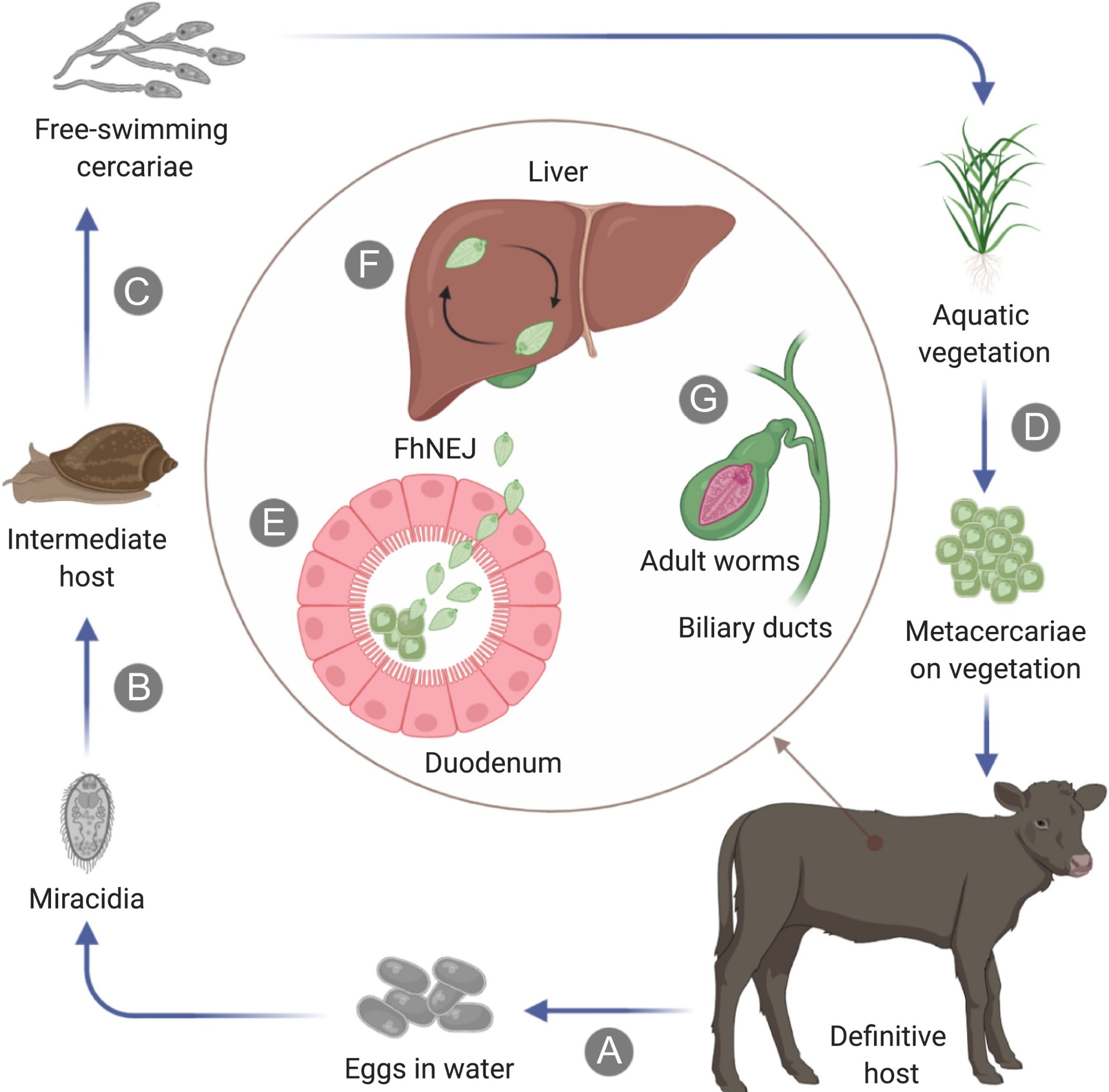
🔹 Life Cycle (Indirect) ⭐
Primary host: Sheep / Cattle / Human
Intermediate host: Freshwater snail (Lymnaea)
Stages:
Egg
Miracidium (enters snail)
Sporocyst
Redia
Cercaria
Metacercaria (on aquatic plants)
Adult in liver
🔹 Disease Caused
Fascioliasis
Symptoms:
Liver damage
Abdominal pain
Jaundice
Anemia
🔹 Economic Importance
Causes huge loss in livestock industry
Affects meat and milk production


