
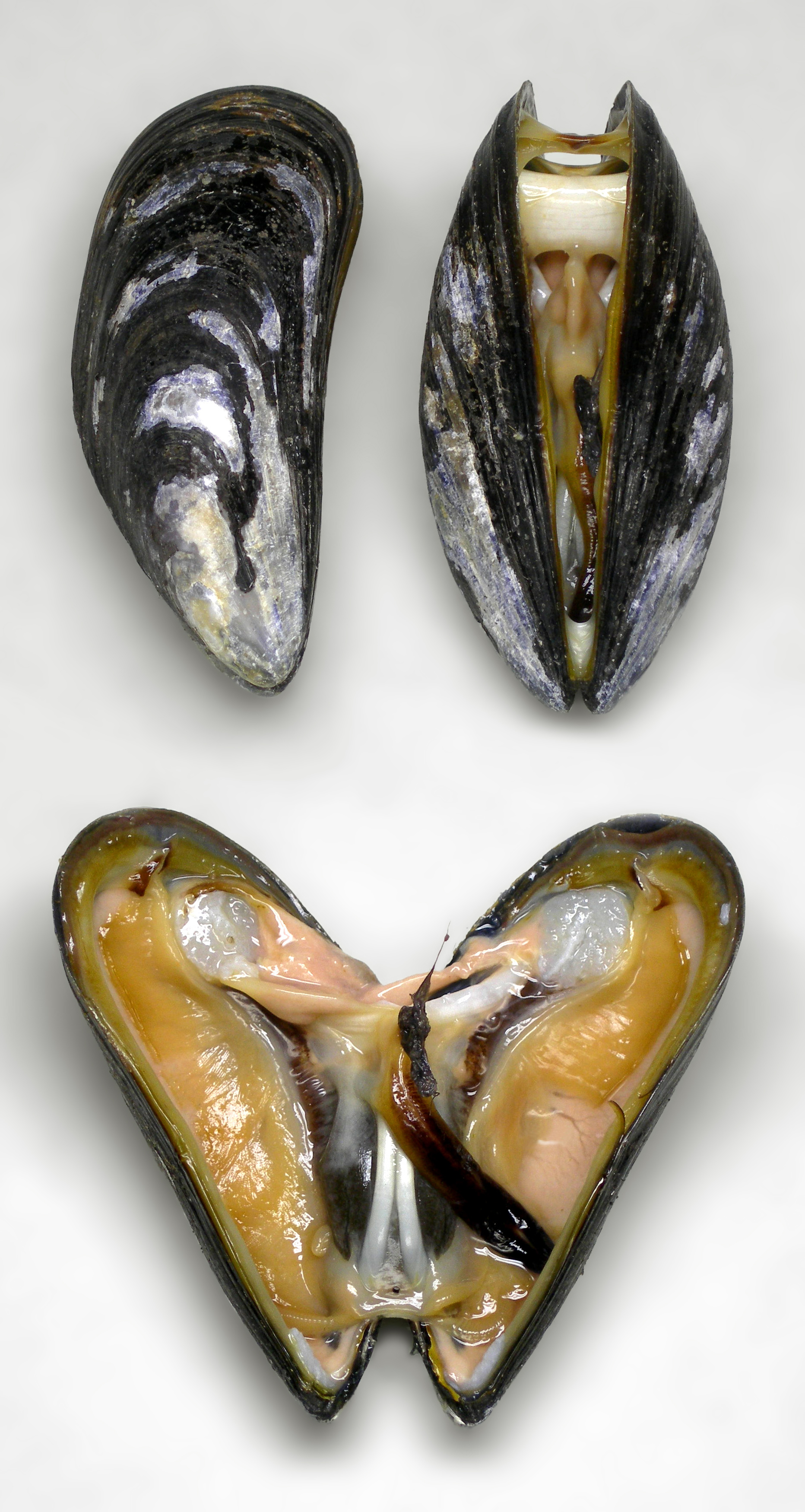
Mytilus (Marine Mussel)
Systematic Position
Phylum: Mollusca
Class: Bivalvia (Pelecypoda)
Genus: Mytilus
Habit and Habitat
Marine mollusc
Found attached to rocks, piers, and ships in coastal areas
Lives in colonies
External Morphology
Body enclosed in two elongated shell valves
Shell is:
Dark blue or black
Smooth and elongated
Head absent
Body parts:
Mantle
Visceral mass
Small wedge-shaped foot
Shell
Two valves joined by a hinge ligament
Closed by adductor muscles
Shell made of calcium carbonate
Special Feature – Byssus
Byssus threads secreted by a byssal gland
Used to attach firmly to rocks
Digestive System
Complete digestive system
Radula absent
Filter feeder
Food particles trapped by gills
Respiration
Aquatic respiration
Respiration by gills (ctenidia)
Circulatory System
Open circulatory system
Heart three-chambered:
2 auricles
1 ventricle
Reproduction
Dioecious
External fertilization
Development
Indirect development
Larval stages:
Trochophore
Veliger
Economic Importance
Used as seafood
Helps in water filtration
Identification Points
Marine bivalve
Byssus threads present
Filter feeder
Two shell valves


