
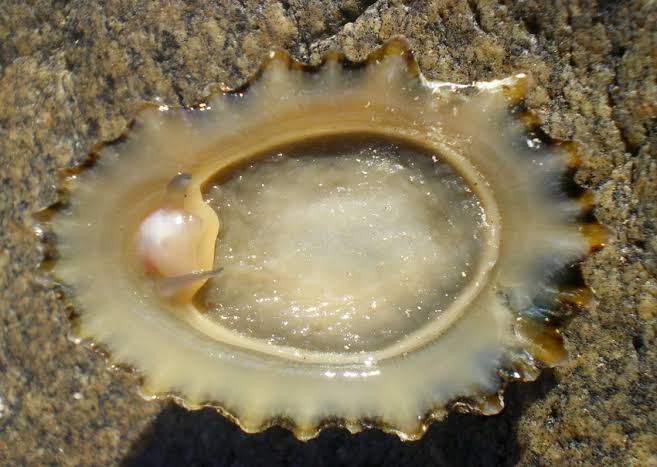
Patella (Limpet)
Systematic Position
Phylum: Mollusca
Class: Gastropoda
Genus: Patella
Habit and Habitat
Marine mollusc
Found attached to rocks in intertidal (shore) zones
Lives in areas exposed to strong waves
Herbivorous, feeds on algae
External Morphology
Body is soft, unsegmented, and bilaterally symmetrical
Protected by a single, cap-shaped (cone-shaped) shell
Shell:
Broad base
Central apex
Body divided into:
Head (poorly developed)
Muscular foot (large and flat)
Visceral mass
Shell
Univalve, non-coiled shell
Made of calcium carbonate
Strongly attached to rocks for protection
Foot
Large, flat, and muscular
Acts as a suction disc
Helps in firm attachment to rocks and locomotion
Mantle and Mantle Cavity
Mantle secretes the shell
Mantle cavity contains ctenidia (gills)
No lung present
Digestive System
Complete digestive system
Mouth contains radula
Radula scrapes algae from rock surfaces
Digestive tract ends in anus
Respiration
Aquatic respiration
Respiration through gills (ctenidia)
Circulatory System
Open circulatory system
Heart is two-chambered:
1 auricle
1 ventricle
Excretory System
One pair of kidneys (metanephridia)
Nervous System
Primitive ganglionic nervous system
Cerebral, pedal, and visceral ganglia present
Sense Organs
Eyes and tentacles poorly developed
Osphradium present for chemical sensing
Reproduction
Dioecious (sexes separate)
External fertilization
Eggs released into seawater
Development
Indirect development
Larval stages:
Trochophore
Veliger
Economic Importance
Used as food in some coastal regions
Important in marine ecosystem (algae control)
Identification Points (Exam)
Marine gastropod
Cap-shaped, non-coiled shell
Large muscular foot
Radula present
Gills for respiration
Special Feature
Unlike most gastropods, Patella shows bilateral symmetry because torsion is absent or reduced.


